BLOG
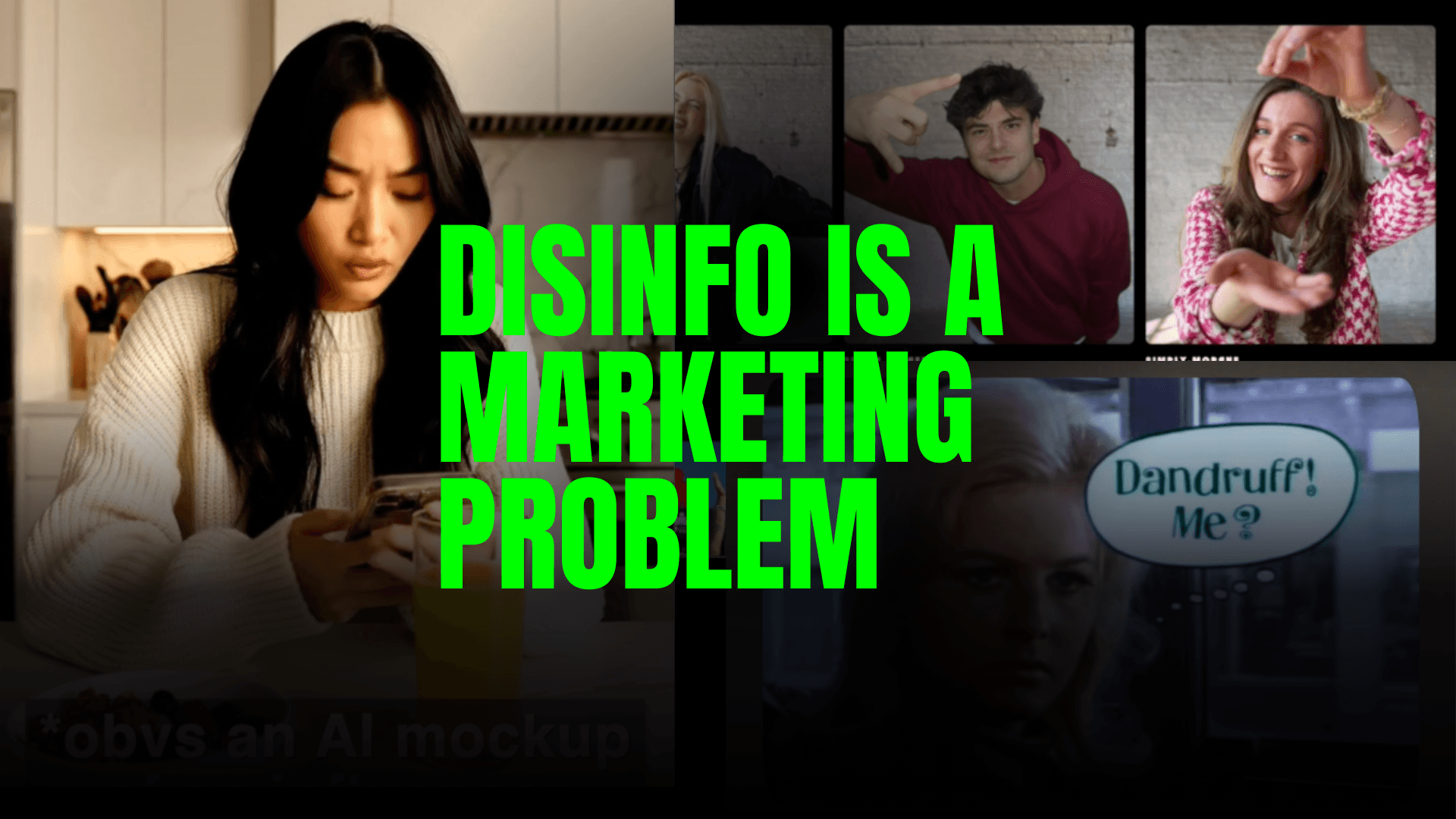
Disinfo is a Marketing problem
Disinformation isn’t a knowledge problem, it’s a motivation problem and the fix is designing media that pays people in social currency, not lectures.
Author:
Dirk Kunze
Published:
2026-02-03
Share Article
Everyone wants the truth, right?
Well, people can base a whole political ideology on "next to NO info" if it makes them feel good... but if they spill a cup of coffee on a laptop, suddenly research seems like a good idea.
This is why very little is working so far to solve the disinformation problem. Old media thinking fundamentally misunderstands the User Motivation and User Experience.
Our motivations are complex. Sometimes we seek truth but more often than not, belonging or status or distraction become more important.
People don’t open TikTok to be lectured. And many don’t see the relevance of spending energy learning a new skill like media literacy if it won’t help them get ahead in the endless grind of modern social competition.
So here’s a new take on the "human layer" of the disinformation problem - it’s a pivot from pedagogy (teaching people how to think) to social currency (helping people belong):

So, in order to compete for influence in the new digital reality, we need to do media that meshes with how people work in the real world. Sure, lifestyle influencers and a solid media mix across other formats has a price tag - but if we’re serious about solving the disinfo and polarisation crises, we need to get way beyond organic social (which only reaches people who ‘like’ you already).
And there’s a precedent.
Way back when the hot new media technologies were radio and TV, governments spent billions creating their own influence machines – the BBC, ARD, RAI, PBS, ETC.... and for a century they enjoyed a near monopoly on the information flow.
Those influence machines aren’t totally obsolete. They just have a hundred million competitors now. The monopoly is gone and the competitors (including foreign governments and shady xenophobes) use smart behavioral science and data to win users over to them. So what we need is a healthy mix of old & new media!
Doing this would actually be a huge boost to fact checking.
Algorithms serve fact checks to people who already like facts.
Our analysis of 10,000 comments across 10 fact checking orgs shows up to 80% political alignment with democratic values. That means: The people engaging with fact checks probably know the facts already, are the least vulnerable segments to disinfo and (to a significant extent) unconsciously use fact checks to meet their belonging needs.
User Experience makes the internet go round. And good UX is simply about how well the content or design meets the User’s Motivation.
So, increasing User Motivation among the apolitical majority would potentially give a huge boost to fact checking engagement with the segments that really count.